
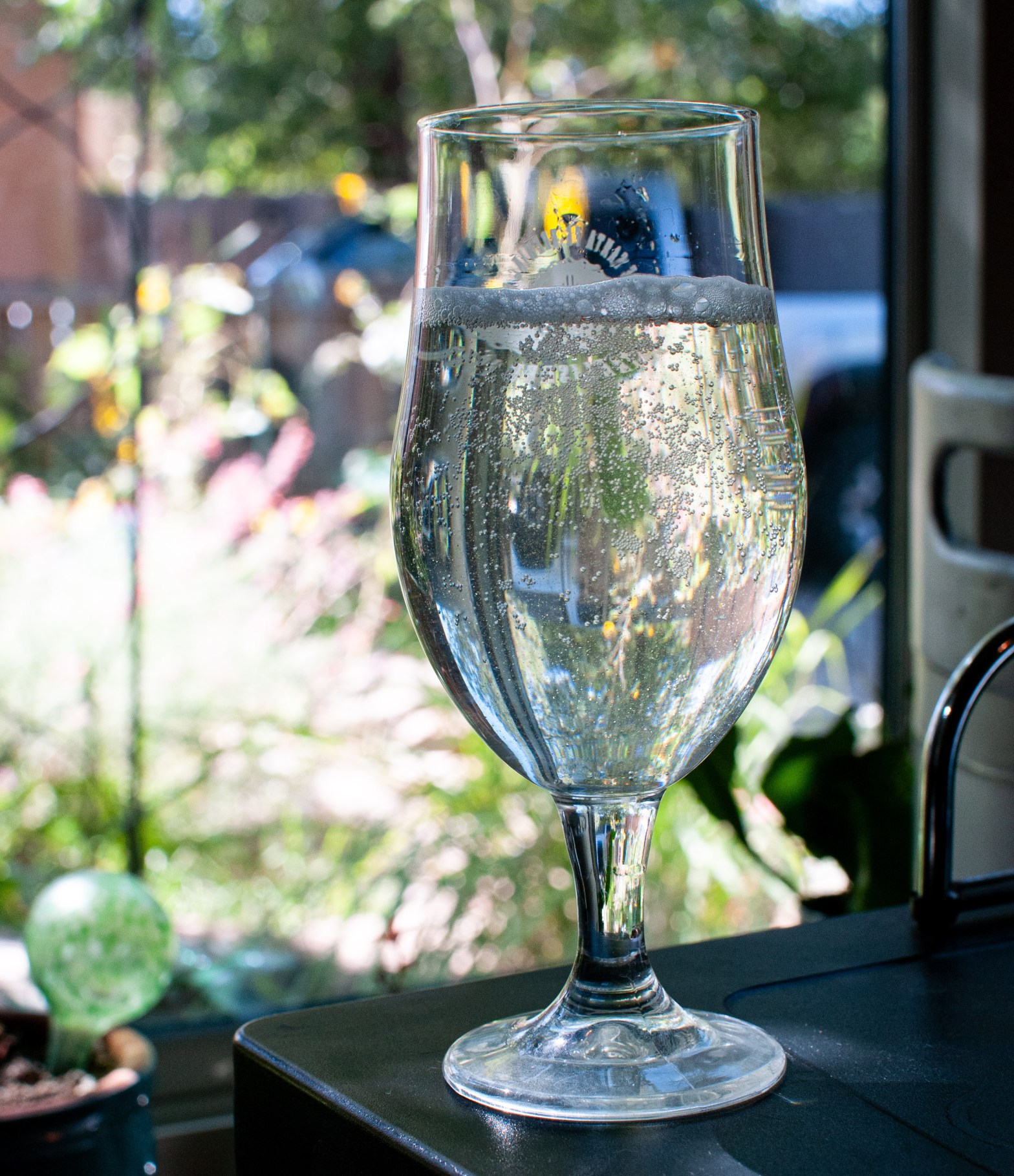
Having an N/A option on tap is a great choice for those looking to cut back on their alcohol intake, or to share with friends who may have given up alcohol entirely. I started keeping hop water on tap a year or so ago and have made over 20 gallons of it.
What is hop water? It’s really just carbonated water with some hop aroma and flavor added to it. Imagine popping open a can of La Croix but instead of it smelling like pomegranate or tangerine, you get hit with a punch of hops. There’s no yeast, fermentation or sugar added. It can be consumed guilt free by just about anyone.
I actually prefer hop water over N/A beers because you get all of the hop aroma without any of the calories or “flat beer” flavor. It’s great for a hot summer afternoon or if you just want something cold and bubbly in the middle of the day without drinking alcohol.
Hop water is incredibly easy to make and, if you already keg your beer, you probably already have all the ingredients on hand. This guide assumes you already have kegging capabilities and access to a kegerator or keezer for serving.

So, what do you need?
Like I said earlier, you probably already have most of the equipment and ingredients sitting in your brew closet. I’ll list the equipment and ingredients I use and then give you a recipe with steps and photos.
Equipment needed:
- Clean and sanitized 5 gallon keg
- Kegerator or Keezer with a CO2 tank attached
- Hop strainer of some sort (I use a stainless steel mesh one, but a hop sack works fine too)
Ingredients you’ll need:
- Filtered or RO water
- Hops (I’ve found that hops typically used fruit forward IPAs work very well)
- Gypsum
- Calcium Chloride
- Epsom Salt
- Citric Acid
- Biofine (optional)

If you ask ten different people how to make hop water, you’ll probably get ten different methods. The one I’m outlining below has worked well for me and also requires the least amount of work. Feel free to experiment with different methods and let us know in the comments how things turned out.
How do I actually make hop water?
I use a no boil, long “dry hop” technique when I make my hop water. The quick and dirty timeline looks like this: Fill a cleaned and sanitized keg with 5 gallons of filtered water, add your minerals, put the hops in there, wait 8 hours then remove the hops, burst carbonate, chill and then serve. That’s it. The actual hands-on time to make your hop water is probably less than 30 minutes from the time you pour the water into your keg to when you’re serving it out of your tap.
The recipe:
This recipe assumes you’re making 5 gallons of hop water in a 5 gallon keg. If you need to scale it up or down, you should be able to multiply or divide the recipe as needed.
- 5 gallons of filtered or RO water
- 1 ounce of hops
- 8g Citric acid
- 3/4 tsp (~3g) Gypsum
- 1/4 tsp (~1.3g) Calcium Chloride
- 1/4 tsp (~1.3g) Epsom salt
The steps:
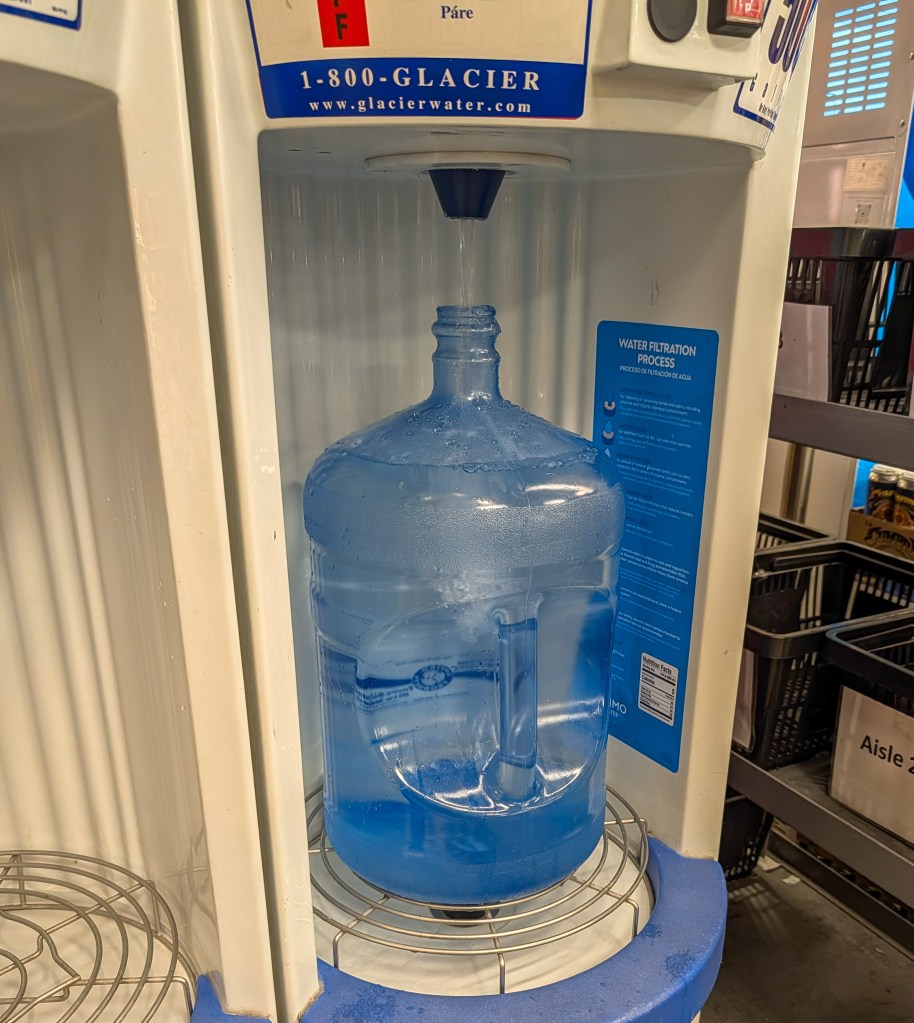
1. Add water and minerals to your keg, leaving about 2″ of headspace from the top. If you’ve cut your CO2 post to be flush with the top of your keg, you can leave less headspace. I use the same water that I use for brewing and that’s RO water dispensed from the machines at local grocery stores.
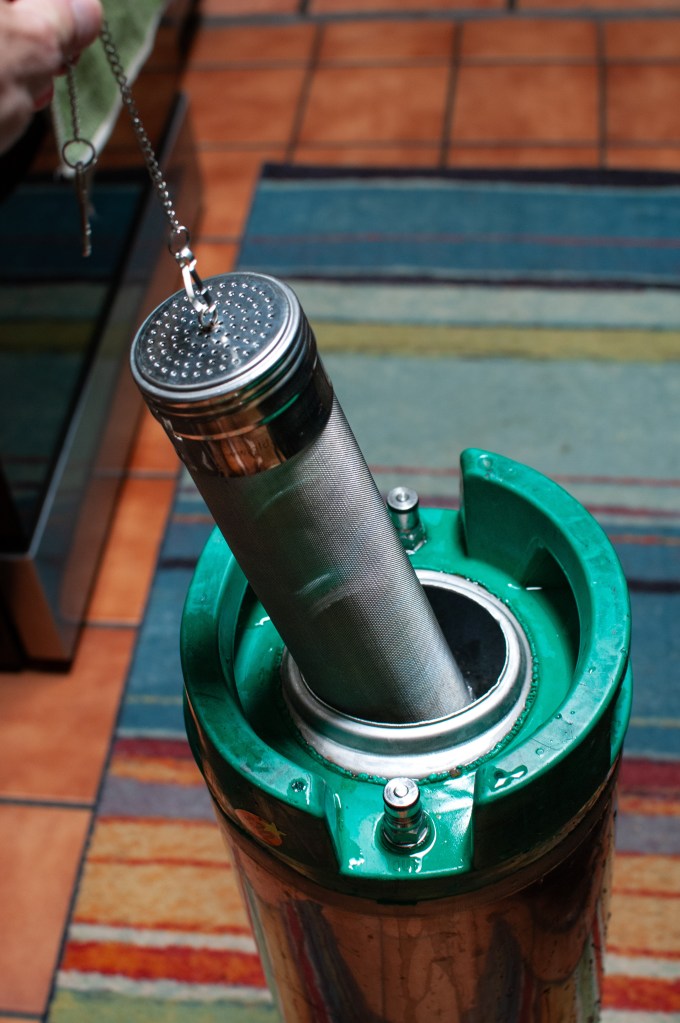
2. Measure out your hops and add them to your hop strainer. Add the hop strainer to your keg, leaving some way to easily retrieve it after we’re done dry hopping. Close the lid and let the hops do their thing for about 8 hours. I like that my stainless cylinder has a cord on it so I can close part of it outside with the lid.


3. After eight hours, remove the hops and attach to CO2 with your regulator to 25-30 PSI. I’ll burp the PRV a few times over the first 5 minutes to try and get a little residual O2 out of the keg. I like to do this outside of my kegerator so I can shake it around several times per day over a few days. Shaking the keg really helps speed things up by promoting faster gas dispersion and absorption. I do this for about three days before moving the keg into my kegerator. If you no longer hear your tank dispensing CO2 when you shake it, that’s a pretty good sign the keg is ready to be moved into the kegerator. If you don’t want to deal with keg shaking, you can put the keg in your kegerator and leave it on 25 PSI of CO2 for about a week.
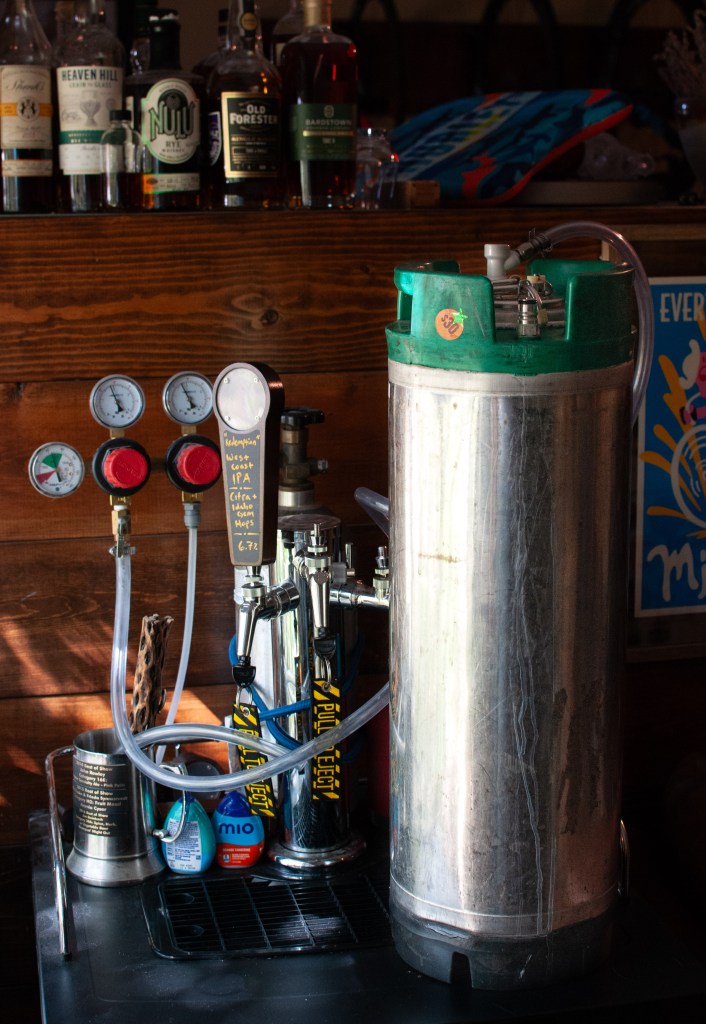
4. The final step is to transfer the keg into your kegerator and attach it to CO2 set to about 25 PSI. It will take a few days for the hop debris to settle out of suspension. Your first few pours will have some hop matter come through, but that will dissipate and you’ll be left with crystal clear hop water as long as the keg remains undisturbed.
To compare what the hop water looks like immediately after putting the keg in the kegerator to what it looks like a few days later and after a few pours, here are some side by side photos.


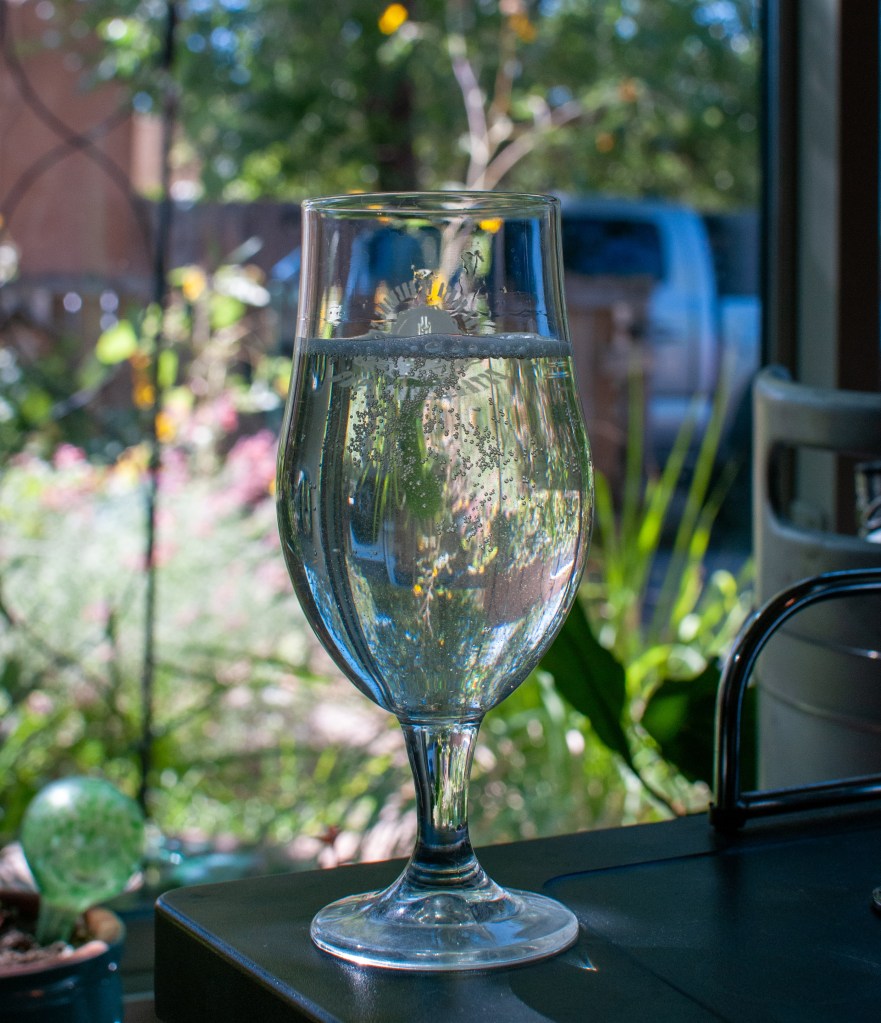
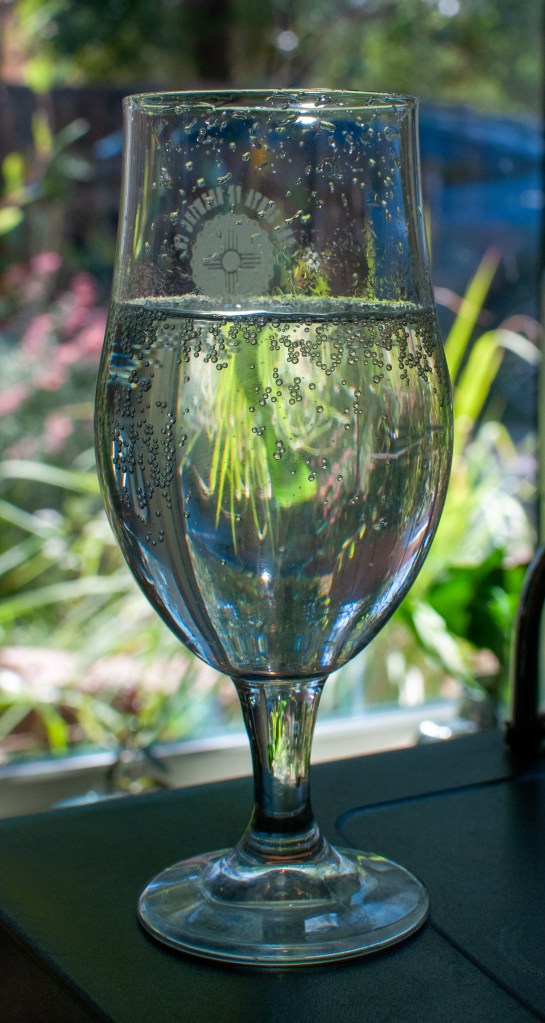
One thing to note is the head dissipates extremely fast, even though the water is still highly carbonated.
What else can I add or experiment with?
Like I said earlier, I’ve made a lot of hop water. I usually experiment with different hops each time. My favorite so far has been Mosaic, but I’ve used a blend of Azacca and Galaxy, Lemondrop, and Idaho Gem in other batches. I also use citric acid since that’s what I have on hand, but you could try using actual citrus juice to acidify it. I’ve heard of people using lime juice with good results.
If you prefer something a little sweeter, dissolving some granulated sugar or dextrose into the water would be something fun to try. I keep some Mio brand water flavoring on hand if I want a little different flavor to my hop water. I usually drink my hop water as-is, but sometimes having a little more flavor or sweetness is nice. While I’ve never tried it, adding fruit or other flavorings directly to the keg might be a fun thing to play with.
Adding some tea bags to your hop water is also a pretty common addition. This will give your tea a little more complexity as well as a chance to pair tea flavor profiles with your favorite hops.
My no-boil approach is mostly done out of a time savings (no heating water and no chilling) and I really like the results. A lot of people will basically heat their water and do a whirlpool with their hops before chilling and carbonating it. This seems to leave the water a little more murky green but may give a little more hop aroma. It may be worth playing with if you have the time.
 Sangre de Cristo Craft Brewers